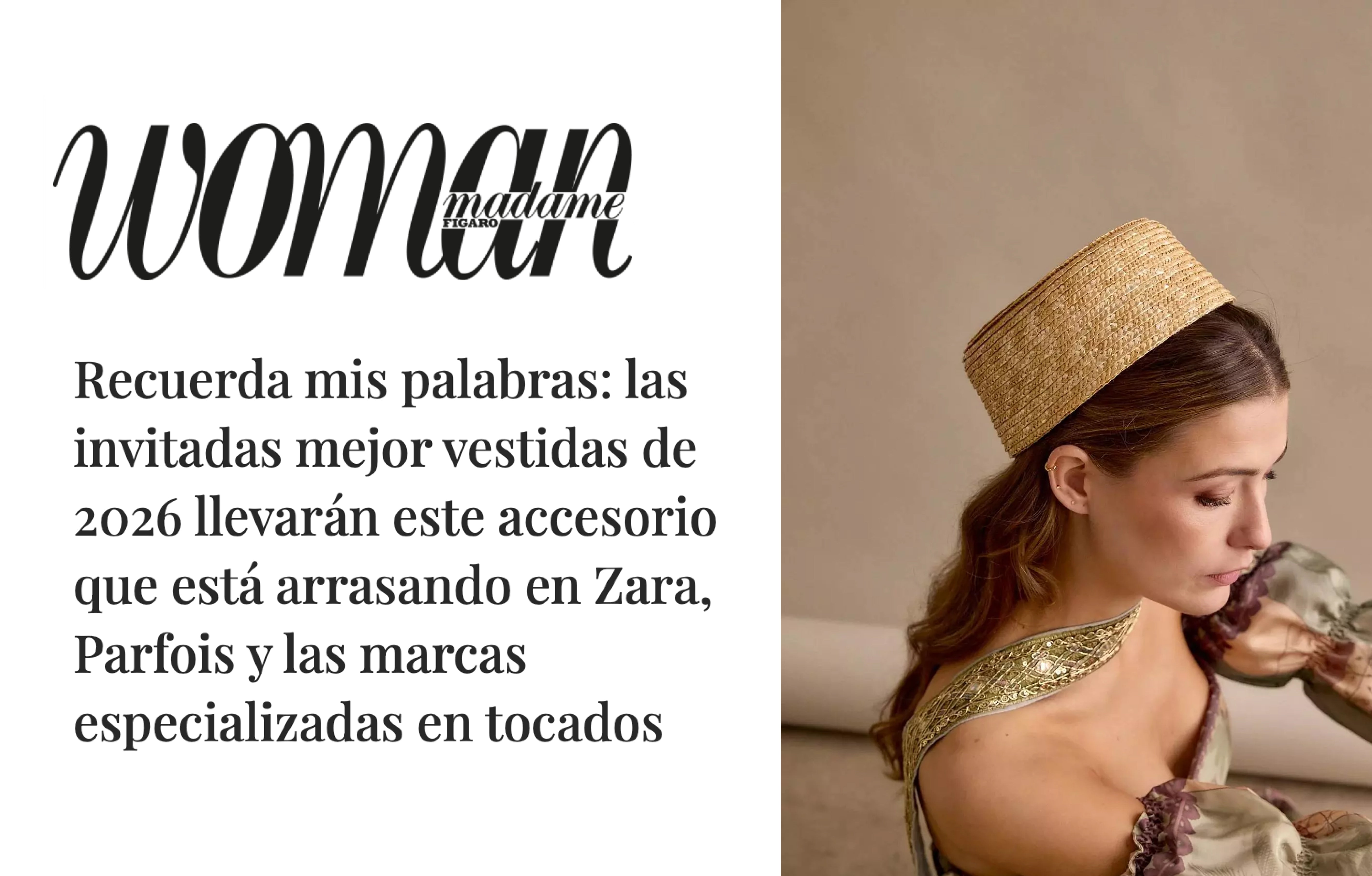
Paula Beneytez, founder of the Madrid-based fascinator brand that wedding guests adore: "The same fascinator can be worn by a 60-year-old mother of the bride and the groom's 20-year-old sister, and the result is completely different."
Headpieces, closely associated with the world of wedding guests, are enjoying renewed popularity these months thanks to pillbox-style designs. With wedding season in full swing, we spoke with Paula Beneytez, founder of the Marcela & Co brand, to learn more about her artisanal project.
The day Paula Beneytez went to a bead store on Madrid's Paseo de la Habana to browse materials with the aim of buying everything she needed to make a headpiece, she didn't imagine it would be a decisive moment in her life. After crafting that headpiece in the most artisanal way, she began researching this peculiar accessory, and that interest eventually materialized into her own brand, Marcela & Co, specializing in this accessory.
For a time, she combined her job at a multinational company with her passion for headpieces, until in 2024 she definitively reoriented her career, going all-in on her personal project. Today, with her pieces crafted by hand in Madrid, she has established herself as one of the leading independent brands in headwear. We spoke with her to learn more about the brand, the creation process of her pieces, and the etiquette behind these designs in a season where headpieces have gained special prominence thanks to pillbox-style designs.
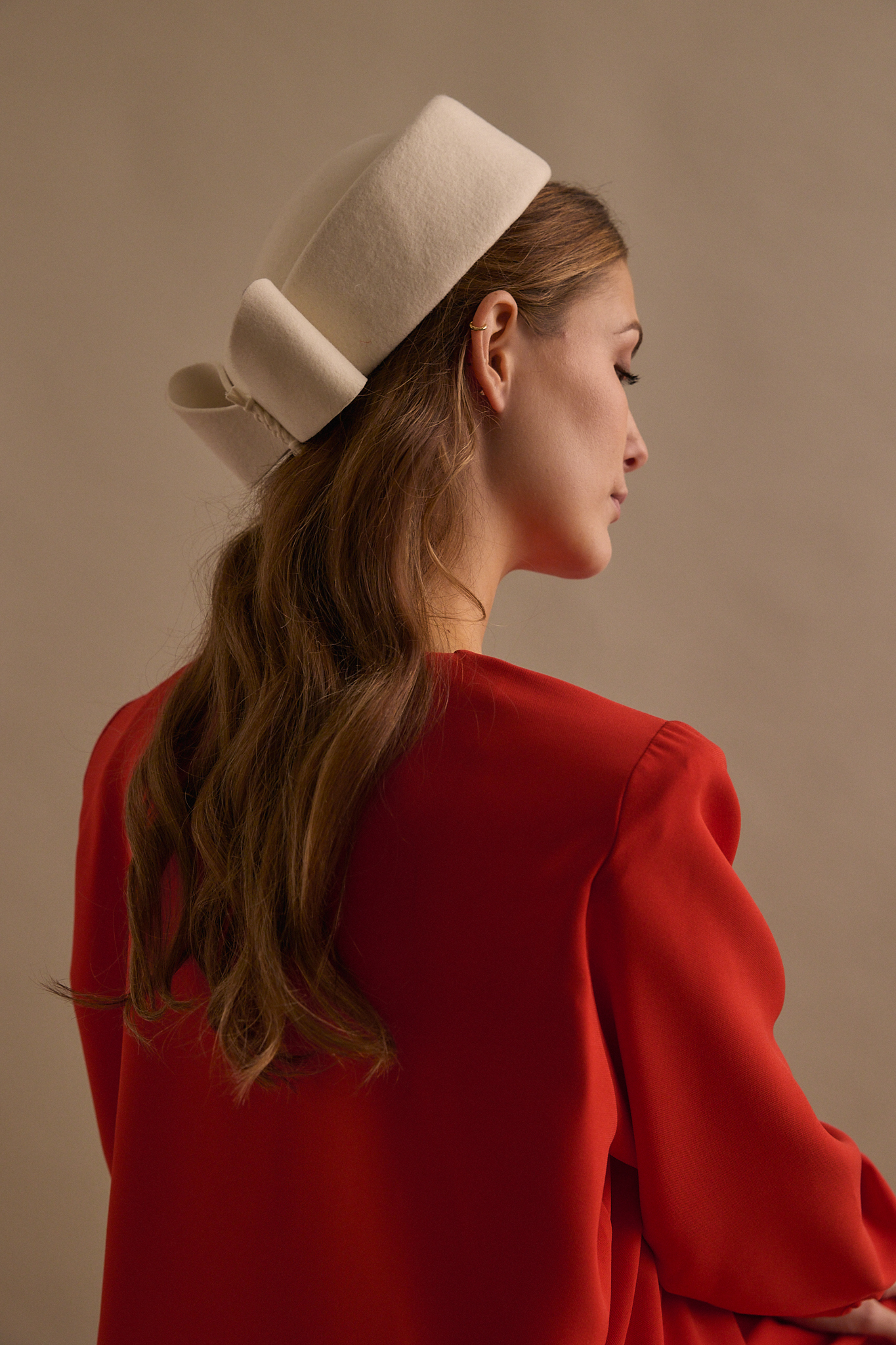
How did the idea of creating a brand for something as specific as headpieces come about?
Creating Marcela & Co was the result of many small circumstances. On one hand, I had studied Business Administration and Management [ADE]. I studied at ICADE and loved the degree. However, when I started working, it was a huge disappointment. It didn't truly fulfill me, it didn't excite me, I didn't feel it was mine. When I was studying, I couldn't wait for Monday to come because I loved university, and when I entered the professional world, I was just waiting for the workday to end. I knew something had to change. I couldn't picture myself in that dynamic my whole life. Furthermore, salaries weren't high at all, and I couldn't have the lifestyle I liked. Added to that, I've always loved fashion, royals... So after making a headpiece for myself for a wedding with materials I bought at Lakú, a bead store that used to be on Paseo de la Habana in Madrid, I started researching and looking for courses and materials for headpieces online. I started making them as a hobby, taking photos, opened an Instagram account, then a website... And here we are today.
Today the brand has a wide variety of proposals. Where do you make your pieces?
I make the pieces in Madrid and use materials like sinamay, abaca, velvet, organza...
How many hours go into each headpiece?
An average of two hours, but it depends a lot on the model.
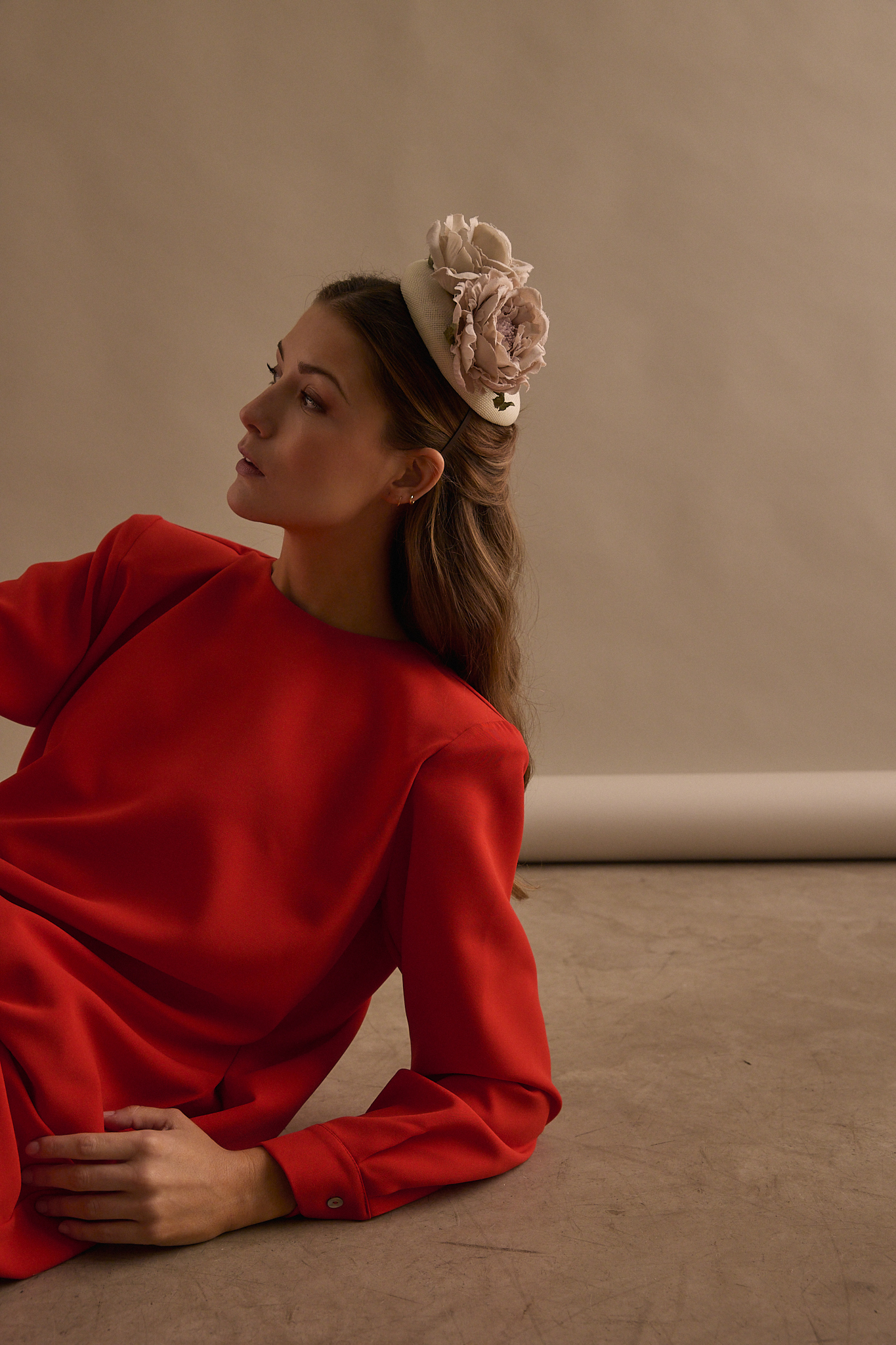
What types of headpieces are most requested?
Our star product is the Baronesa headband, a sinamay headband made entirely by hand, stitch by stitch, available in about 30 colors. The client can choose it with or without a veil, depending on whether they have a morning or evening wedding.
Would you say that headpieces are no longer reserved for the most classic or older women and are now appealing to younger generations?
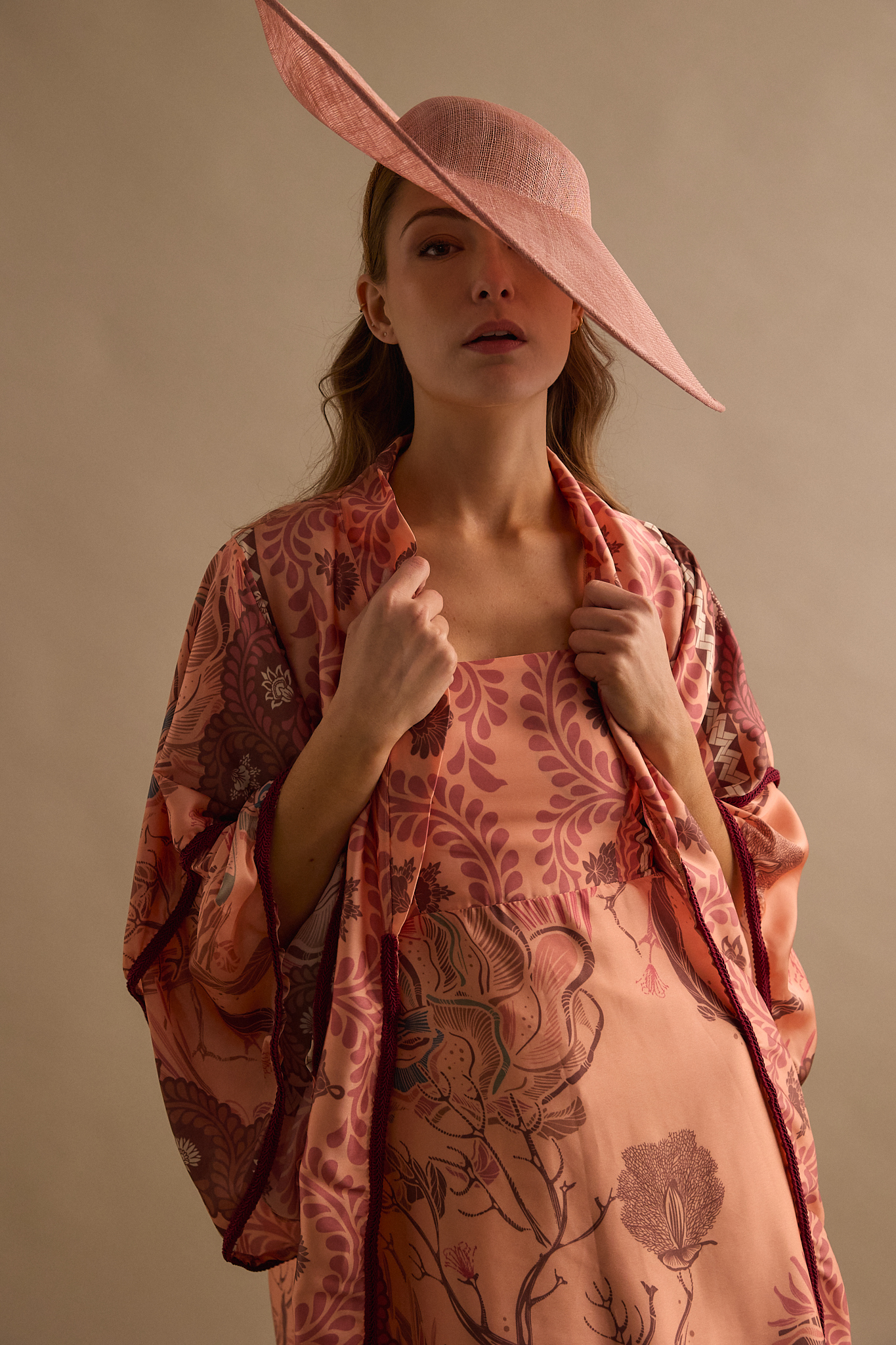
Headpieces are an option for all types of women, regardless of age or socioeconomic level. The same wide-brimmed hat can be worn by a 60-year-old godmother or the groom's 20-year-old sister, and the result is completely different. Headpieces have no age; it depends on how you combine them, on each person's personality and style. It's the same as stilettos. María Martín de Pozuelo and Isabel Preysler wear them with excellent results in both cases. The same goes for headpieces.
For a couple of seasons now, hats, for example the pillbox style, have been reclaiming their place in everyday looks. Even fast fashion has started including them in their collections. As a brand that crafts its pieces by hand, what is your opinion on these mass-produced designs?
There's a market for everyone, different budgets, different situations in which to use them...
Since you started until today, the guest wear sector has become very professionalized. Is there increasing competition?
I think there are many brands for guest dresses but not as many for headpieces. Quite a few have disappeared over the years.
Is wedding season your busiest time, or are headpieces increasingly used beyond weddings, baptisms, and communions?
Since September, weddings haven't stopped. Normally, December and January are months with very few weddings, but this year the trend has changed and wedding season has truly never stopped. In Spain, headpieces are still only used for weddings; some mothers at baptisms and communions do dare to wear them at these events, but they are usually headbands or pillboxes.
Regarding wedding etiquette, when should one wear a headpiece and when not?
The golden rule is that the headpiece gets smaller as the day progresses. So in the morning you can wear anything from a wide-brimmed hat to a headband, and in the evening you should only wear something small like a headband, jeweled hairpins... Similarly, I would reserve glitter and rhinestones only for the evening.
For someone who has never worn a headpiece but wants to try it for the first time, what would you recommend?
Something that makes them feel flattered. The size of the headpiece won't necessarily make them feel more comfortable. Perhaps someone who is used to wearing large hats at the beach feels very comfortable with a wide-brimmed hat, yet with something smaller and less striking, like a headband, they don't feel comfortable because it changes their hairstyle or they don't like to show their ears and don't know how to position it... There are all kinds of cases. If you're someone who is used to wearing headbands daily, you'll probably feel super comfortable with a headband at a wedding, and to make it not look like an everyday accessory, we can add a veil.
What is the most common mistake when wearing a headpiece?
Placing it upside down, with the rachis [feathers] pointing downwards or backwards.
In addition to the purchase option, Marcela & Co headpieces can be rented. How does it work?
The rental system is for one week. Wide-brimmed hats and headpieces can be rented, but not headbands. When the client returns it, we take it to the dry cleaner, repair any damage, and it's ready to be used again. We do not do customizations for rentals.
Do you get more requests for purchase or rental?
Purchase. In Spain, I think fashion rental is still quite challenging for us.
Is there any figure you find particularly inspiring when it comes to wearing headpieces?
Queen Máxima of the Netherlands or Princess Kate Middleton.
To conclude, how would you like the brand to evolve in the medium term?
I would like to sell internationally.