A guest expert explains how to choose the right headpiece based on your dress, hairstyle, and type of wedding
We've spoken with Paula Beneytez, founder of Marcela & Co, to understand how to choose the right fascinator without overdoing the look and what mistakes to avoid for an elegant and balanced result.
Choosing a guest's outfit doesn't end with the dress. In fact, many times it's precisely at the end—when it's time to decide on accessories—that the final result truly takes shape. The fascinator has that silent power to elevate any style or, if not chosen well, to completely unbalance it.
At a time when guests are looking to stand out without overdoing it, this accessory has become a key piece. But not everything goes. To understand how to get it right, we spoke with Paula Beneytez, founder of Marcela & Co, who makes it clear from the start: "The first thing to consider is whether the wedding is in the morning or in the afternoon."
Why the type of wedding is important when choosing a fascinator
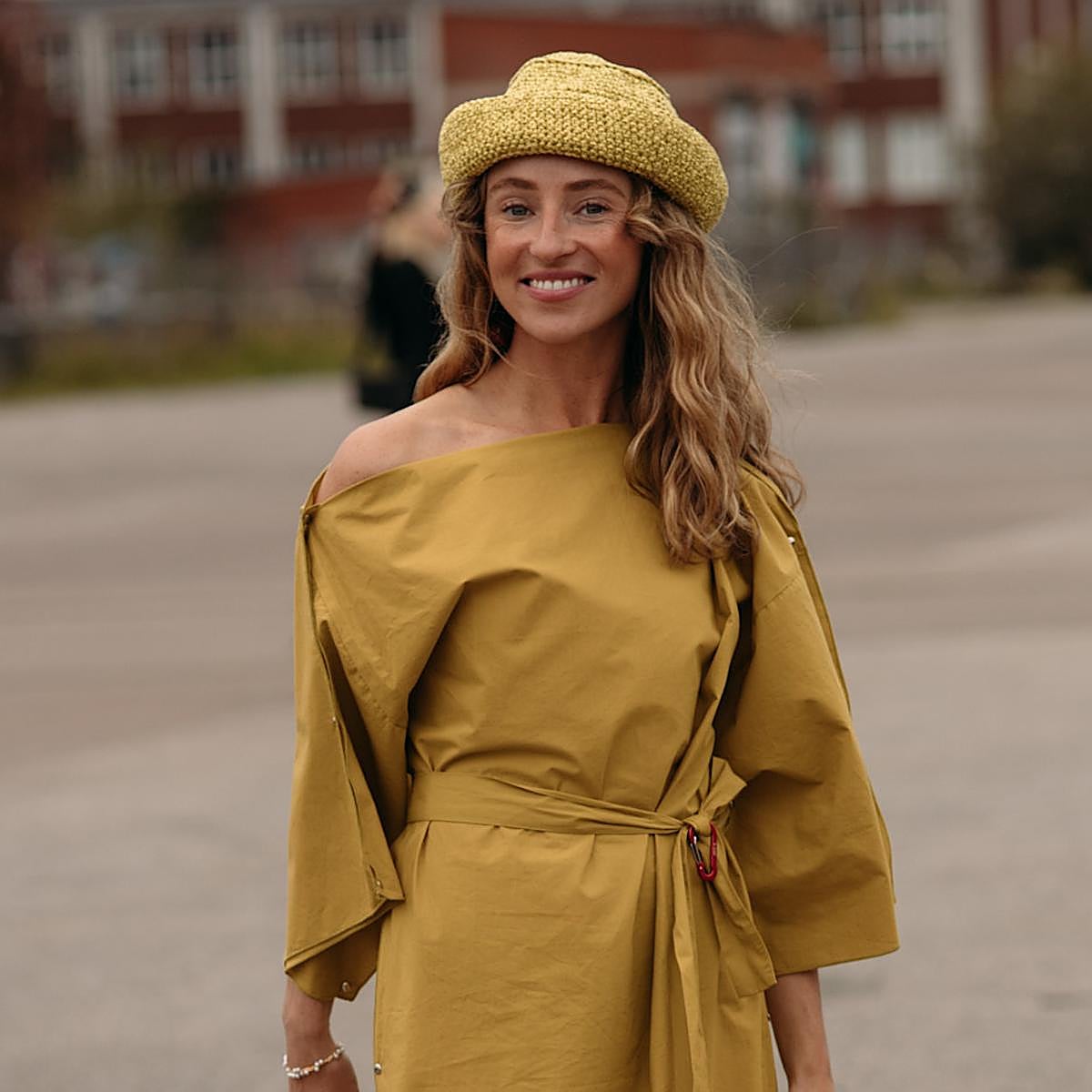
The time of the event is the starting point. "If the wedding is during the day, larger fascinators are allowed, such as wide-brimmed hats or voluminous pieces," she explains. As the day progresses, the focus changes: "afternoon or evening weddings require smaller designs, such as headbands or hair ornaments for buns or ponytails."
Added to this is the setting, which influences more than it seems. "The time and place determine the level of sophistication and the size of the piece," she notes. Therefore, for weddings in the countryside, she recommends lighter and more natural materials, such as straw, which better fit the context.
Once the context is defined, the balance with the dress comes into play. "If the dress is very striking, the fascinator should be more subtle; if the dress is simple, the fascinator can be more sophisticated to elevate the ensemble," she explains. It's not about standing out separately, but about everything working together.
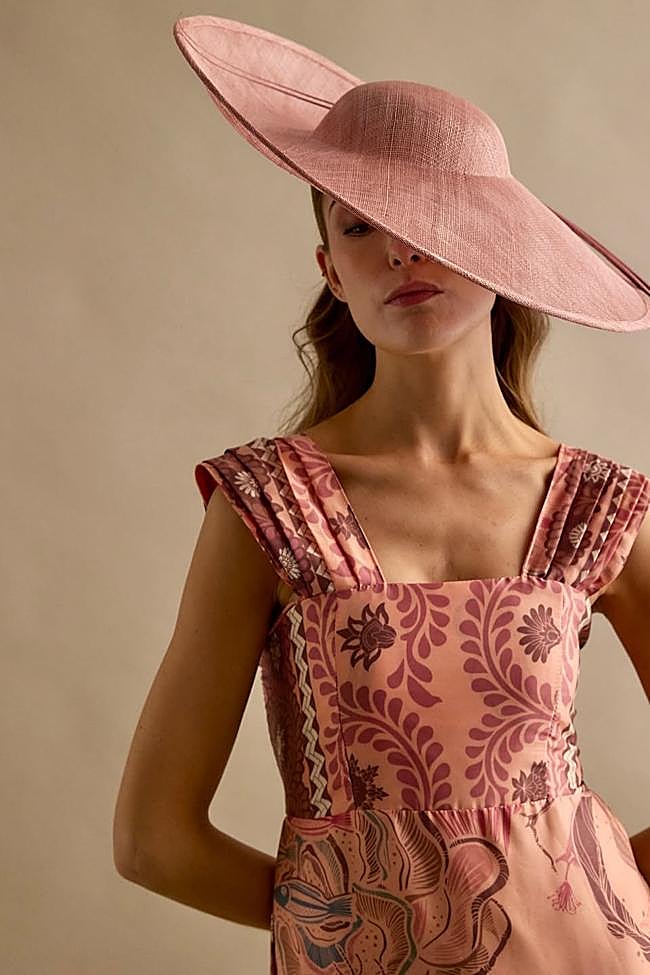
The color should also be complementary. "Not everything has to be the same shade, but there should be harmony," she adds. It is this visual coherence that makes a look go from correct to truly elegant.
Hairstyles, mistakes, and trends that work
The hairstyle is another key element, although it is often decided at the last minute. "Generally, hair tied back in a low bun, a ponytail, or a braid looks better," Paula explains, as these types of styles help integrate the fascinator and provide a more polished finish.
Even so, not everything is limited to updos. "Headbands look great with loose hair, but always well-styled," she clarifies. The difference lies in the finish: well-groomed hair completely changes the perception of the look.
Among the most common mistakes, one is repeated more often than expected. "Not wearing a fascinator at a morning wedding," she states. Although the rules are more flexible today, these types of events are still the ideal setting to opt for this accessory.
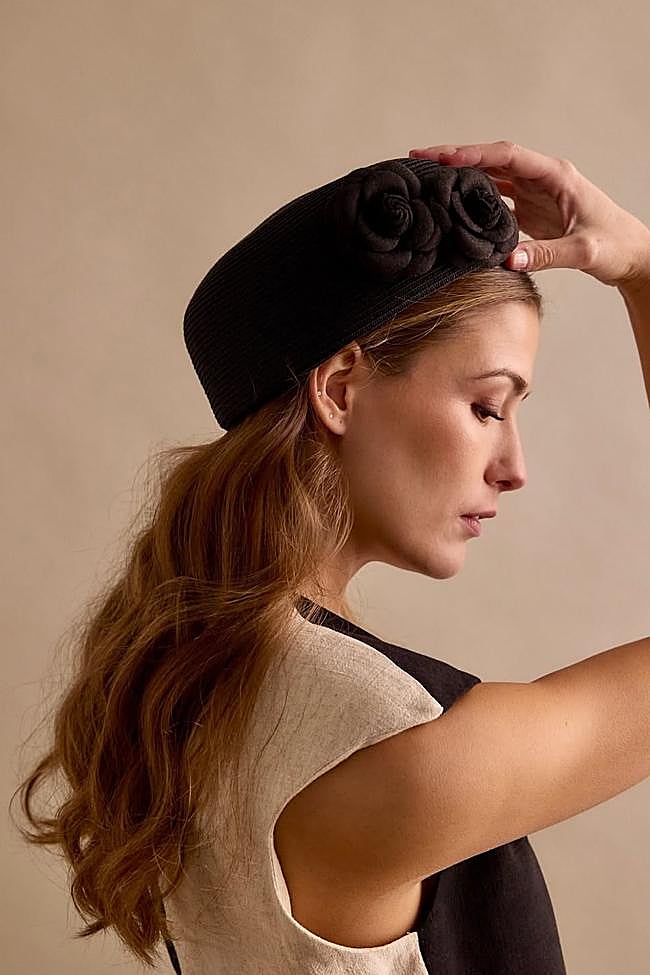
As for trends, capsule hats have become one of the most interesting options. "In general, they don't tend to be excessive," she explains, although she recommends wearing them with some moderation: "I think they are more appropriate for morning events, with well-styled hair and without too many adornments like flowers or feathers."
Beyond aesthetics, comfort also matters. "Most of ours come with a headband, elastic, or clips to secure them with bobby pins," she explains, which allows the fascinator to stay in place throughout the wedding without worries.
There are also factors related to face shape. "They particularly flatter oval and elongated faces, as they balance the proportions," she notes about capsule hats, which work especially well with sleek loose hair or half-up styles.
The conclusion, in any case, is simple: the fascinator should not overpower the look, but accompany it. When well chosen, it doesn't stand out separately, but makes everything work better. Because in the world of wedding guests, often the most cohesive look wins, not the most striking one. And in that balance, the fascinator makes all the difference.